
August 5, 2026
Why migrations wobble in the last two weeks
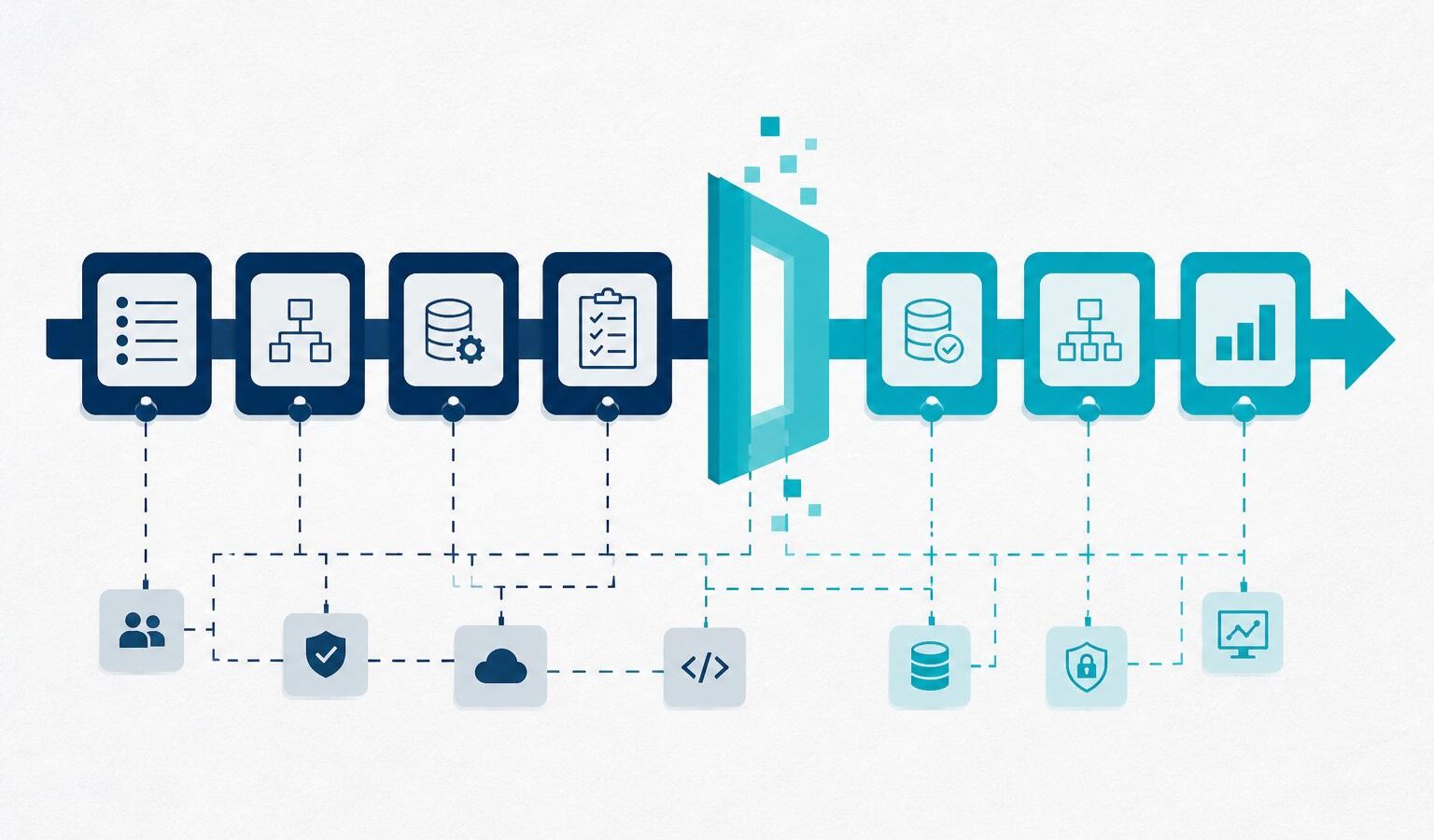
Accelerated migrations look calm on a Gantt chart — until the final fortnight. Payroll, merchant flows, customer transactions, billing cutovers: the work that seemed “on track” suddenly becomes a queue of exceptions.
Having delivered time-critical banking and billing migrations under real operational pressure, I can say this with confidence: the last two weeks rarely invent the problem. They reveal it.
What usually goes soft too early
Readiness criteria that are polite, not binary. “Mostly tested” is not ready. Define what “done” means for data, controls, communications, rollback, and support staffing — then score against that, not against optimism.
Ownership that stops at the workstream border. Migrations fail at handoffs: finance to ops, vendor to internal teams, region to region. Name a single accountable owner for each cutover path.
Decisions parked as “later.” Legal, compliance, and customer-impact choices do not shrink with time. Bring them into the same forum as delivery, with dates.
A cutover plan that earns its keep
- Sequence dependencies ruthlessly — what must be true before the next step can start
- Run dress rehearsals that include the messy bits (exceptions, dual running, support scripts)
- Keep RAID live in the final stretch; retire theatre status
- Agree rollback triggers in advance, in writing, with the people who can actually execute them
- Staff the war room with decision-makers, not note-takers
Minimal disruption is a design goal
“Minimal disruption” is not luck. It is the product of earlier choices: scoped non-negotiables, clear communications to customers and internal teams, and enough rehearsal that go-live is boring.
If your migration is entering its final month and the plan still assumes heroics, change the plan — not the sleep schedule of your team.